
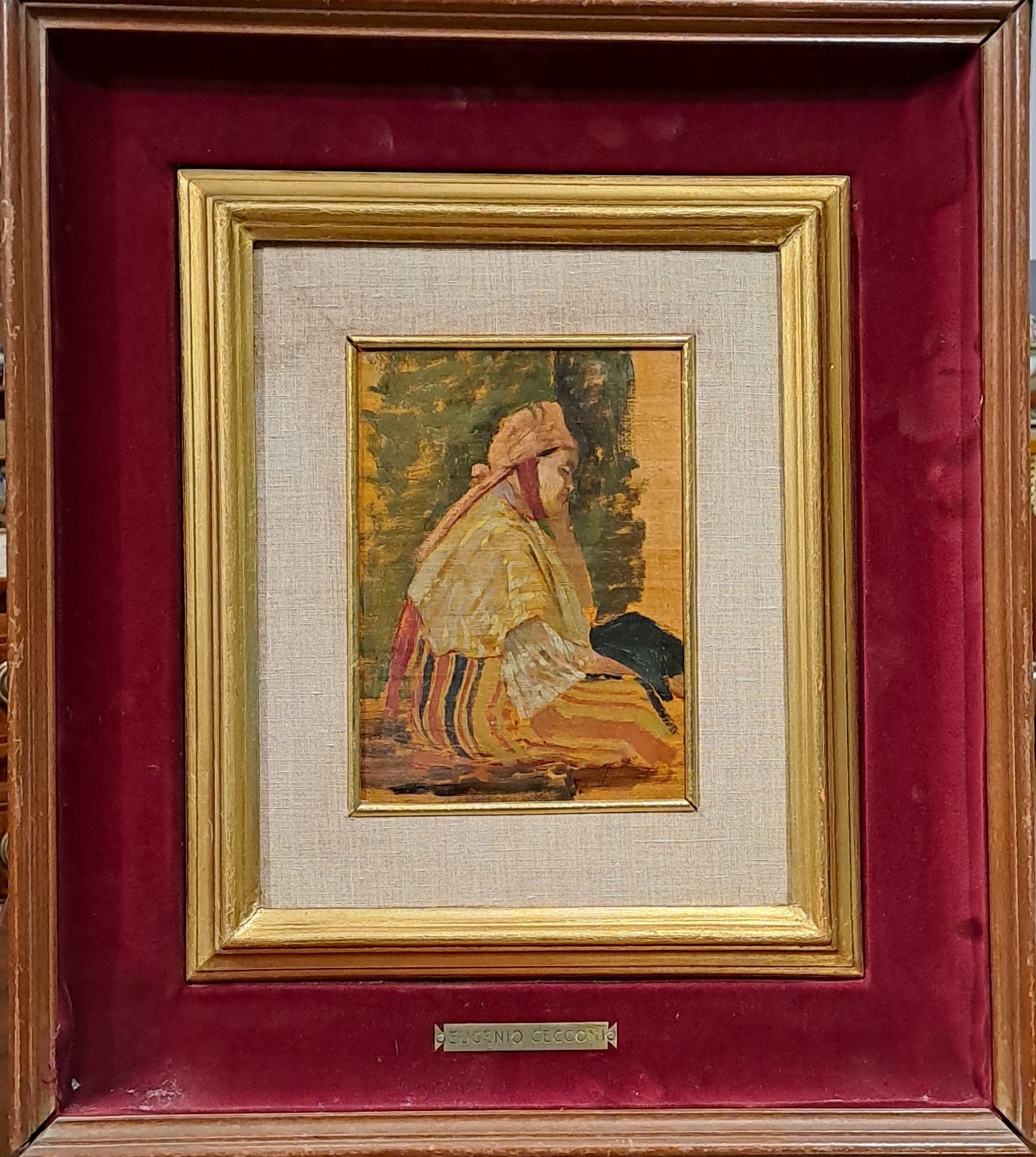
"SEATED ORIENTAL FIGURE" - OIL ON PANEL - EUGENIO CECCONI (1842 - 1903)


Please sign in so that we can notify you about a reply
Oil on Panel Painting: Seated Oriental Figure
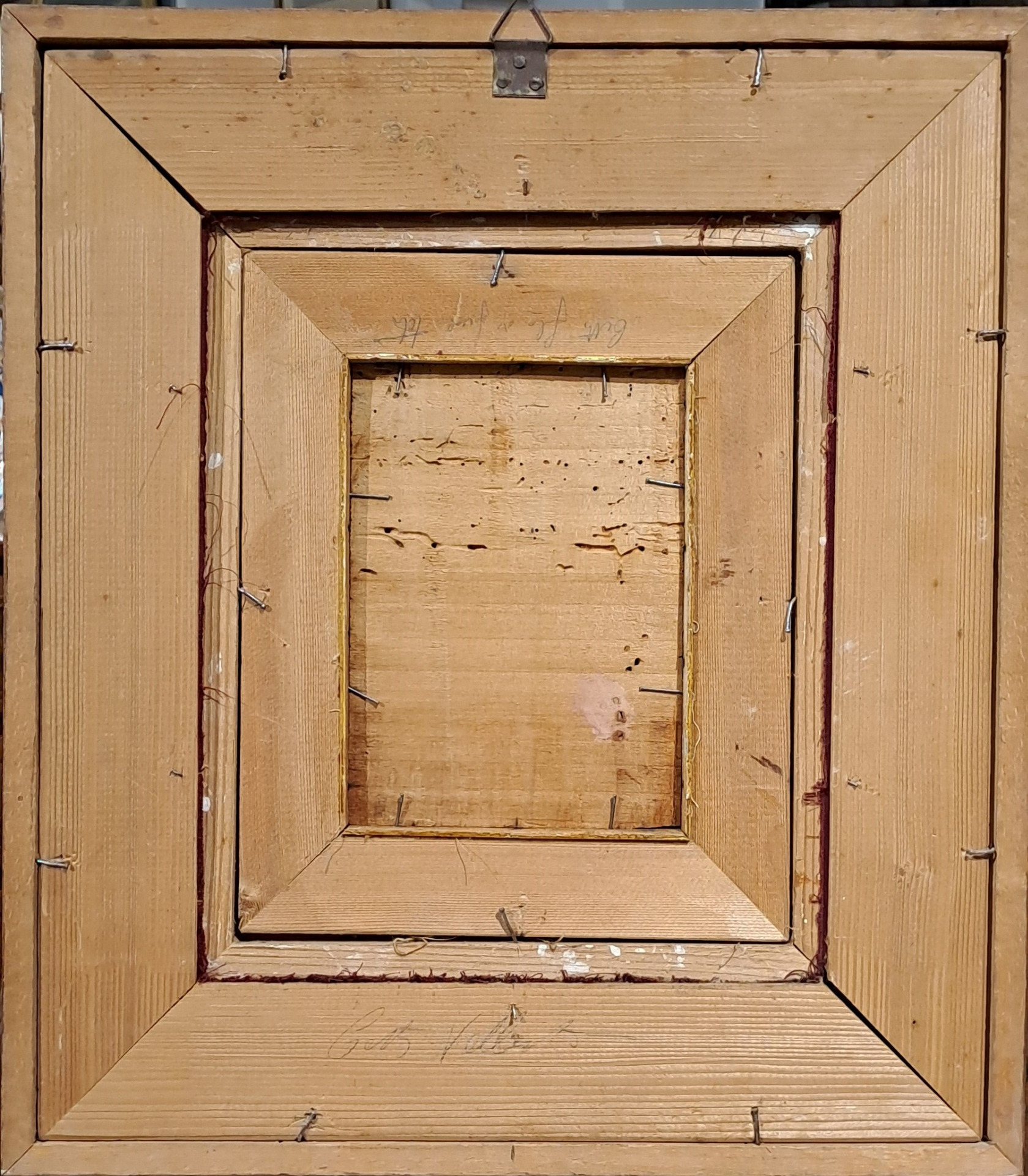
Dimensions: 39 x 44 cm including the frame, 12.5 x 17 cm the panel
Technique: Oil on panel
Period: Late 19th Century
Description of the Work
Fascinating oil on panel painting, by the Livorno painter Eugenio Cecconi (1842-1903), a well-known exponent of the Macchiaioli movement and a tireless traveler.
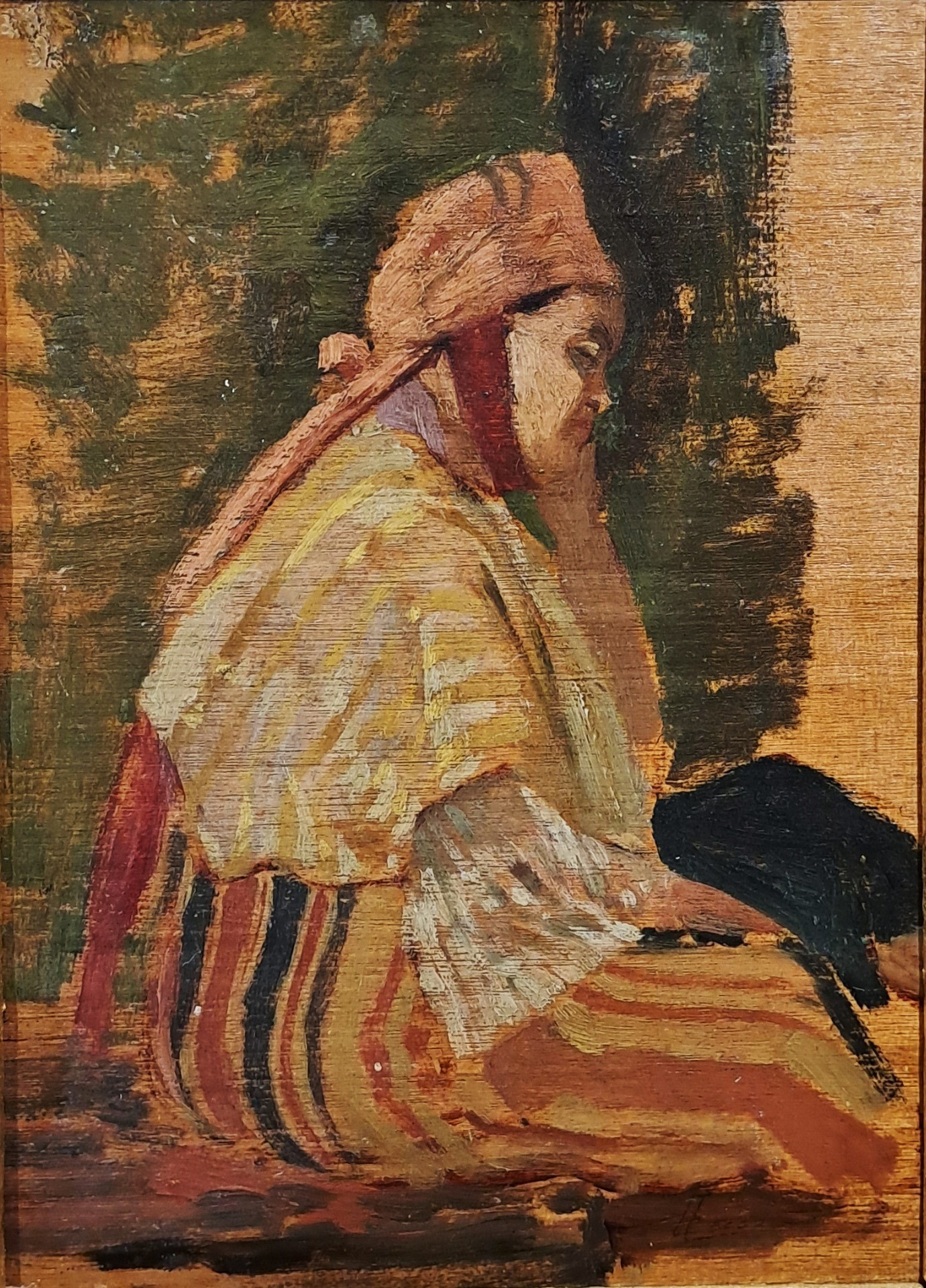
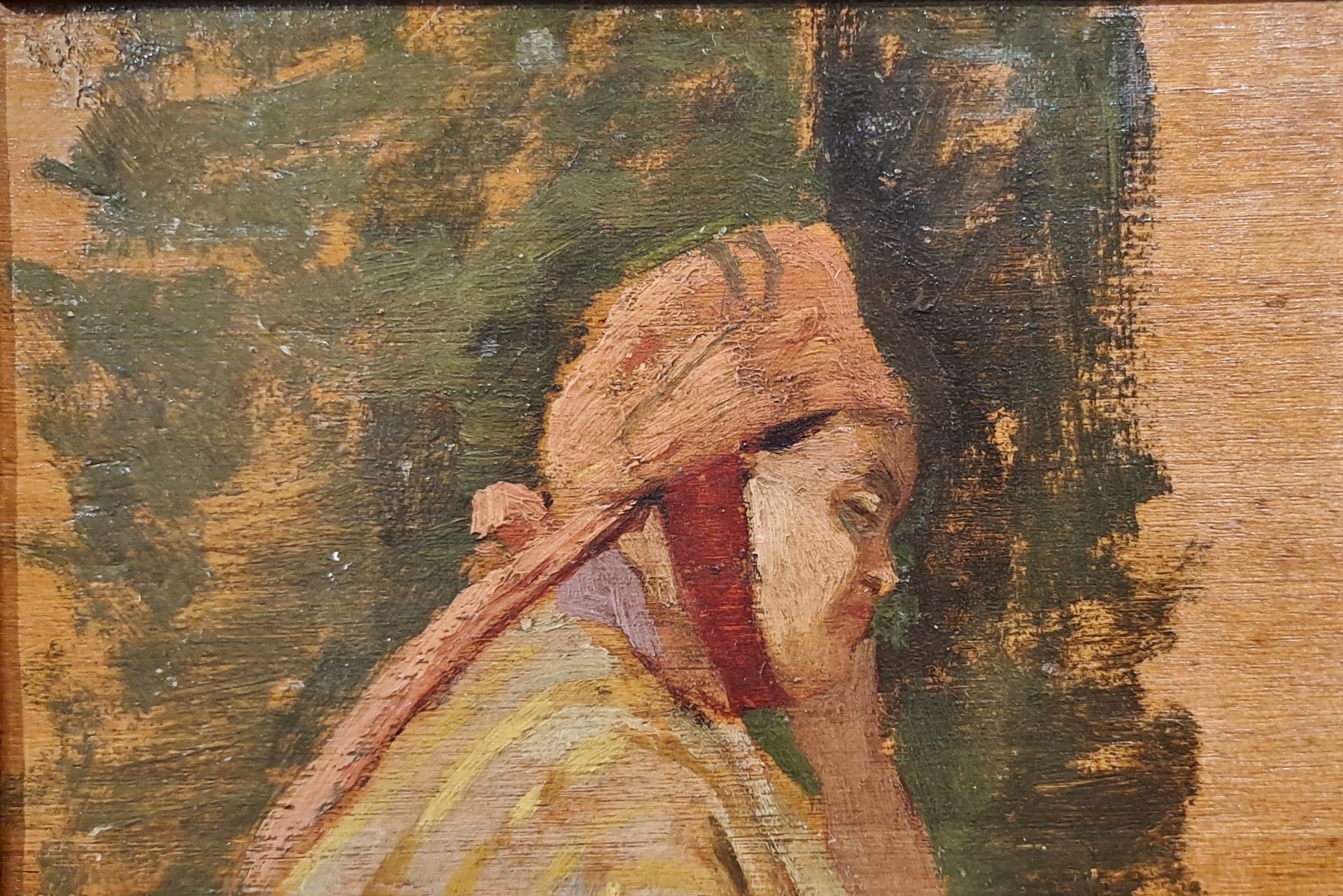
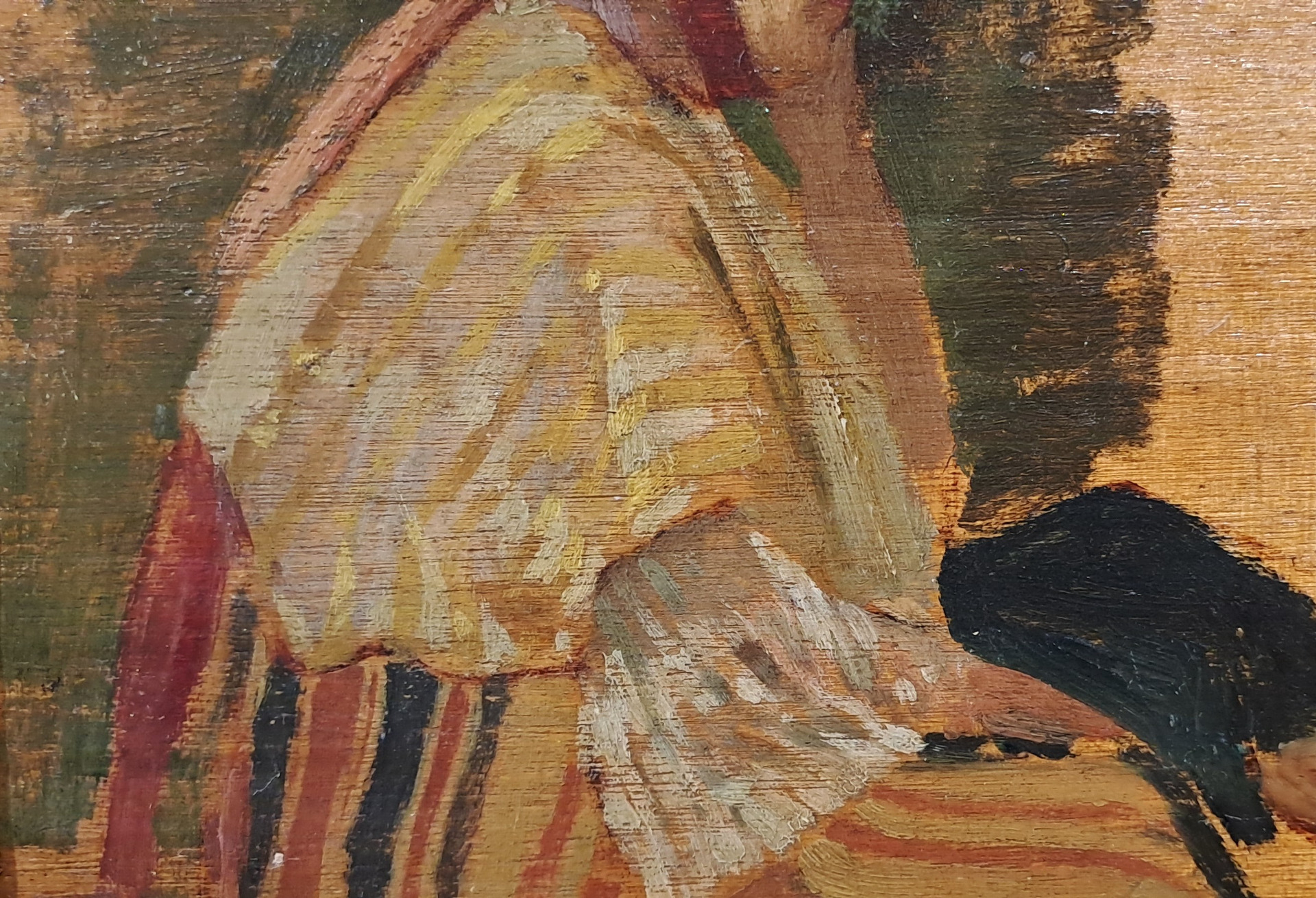
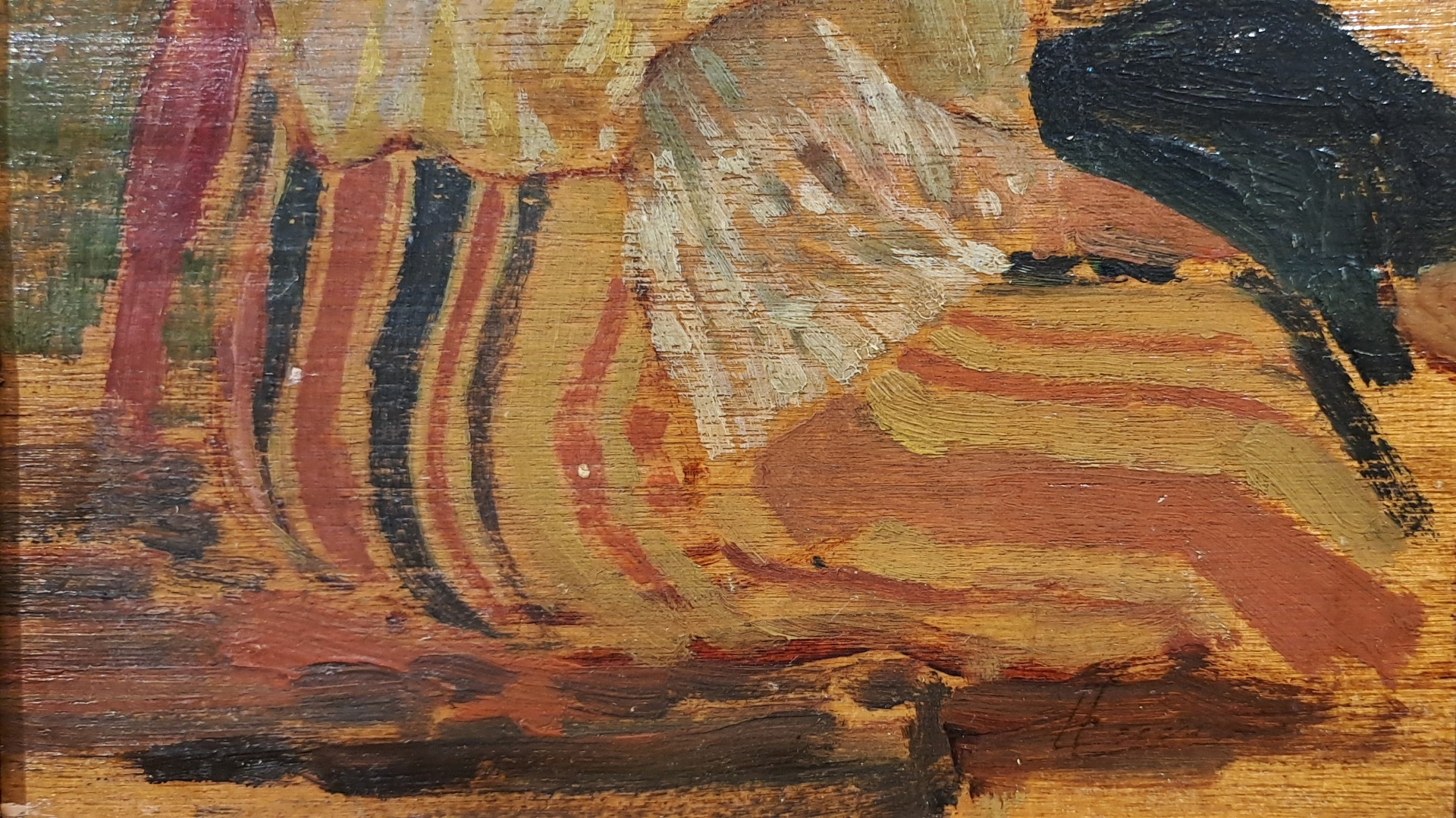
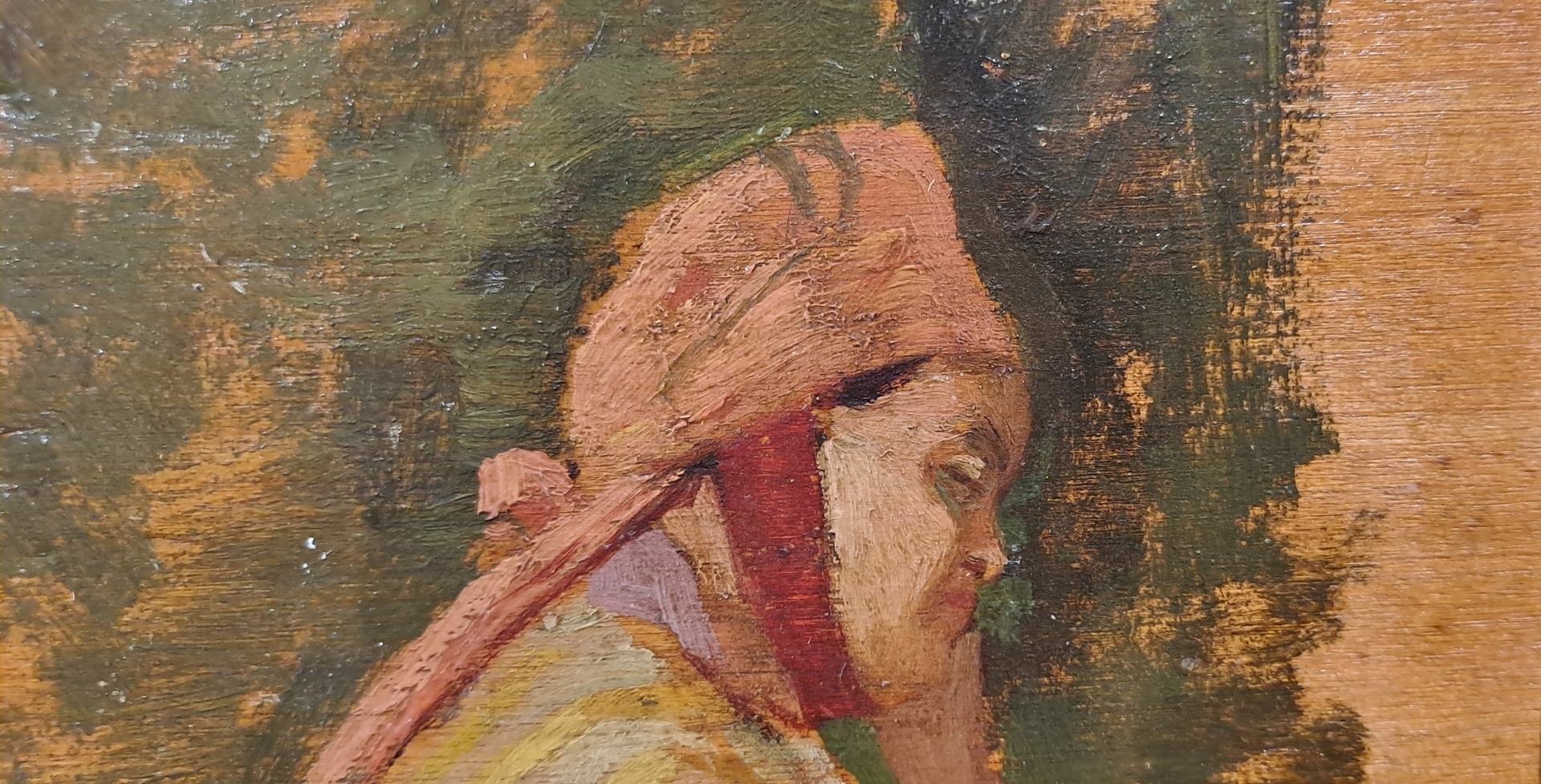
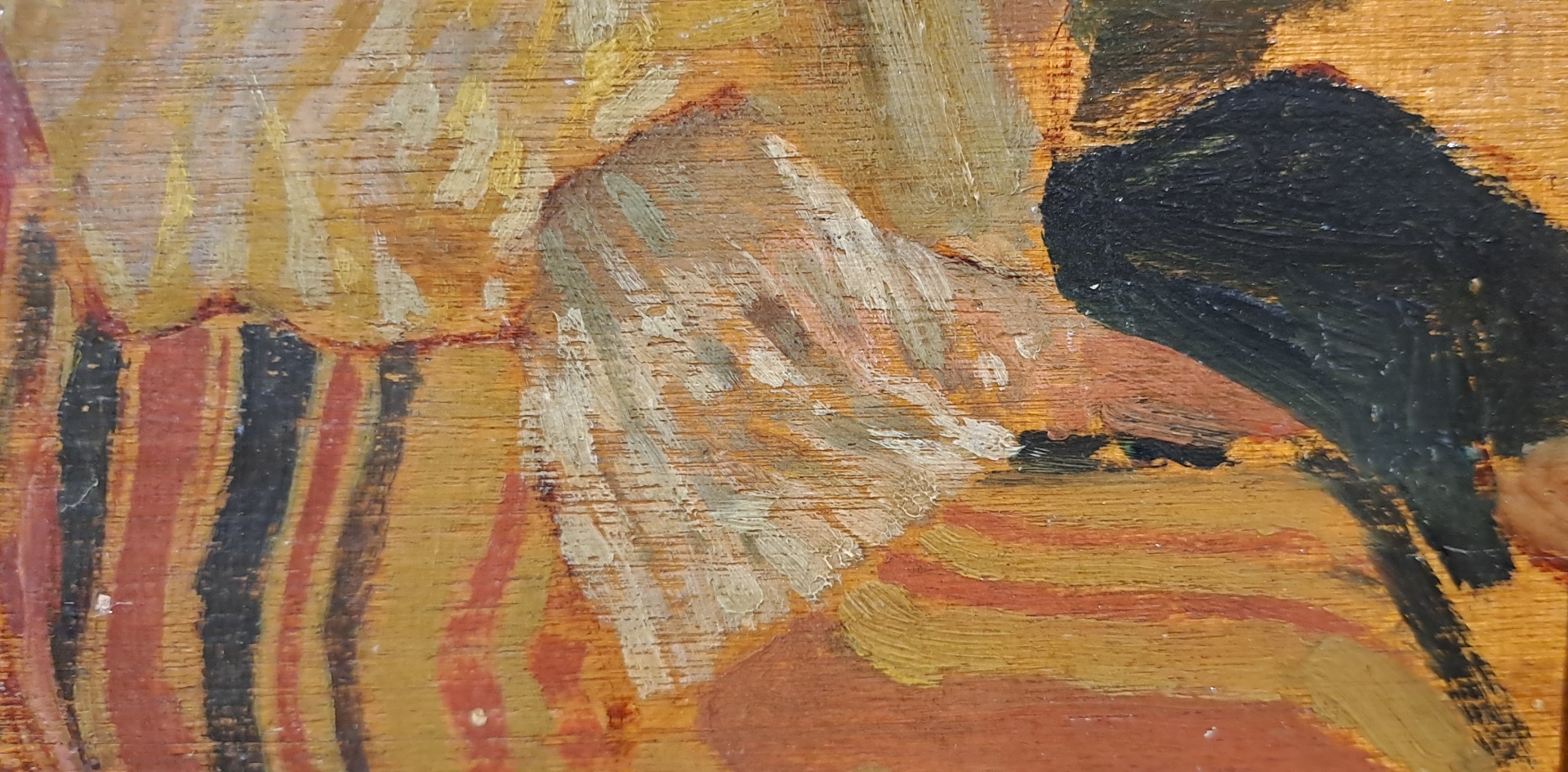
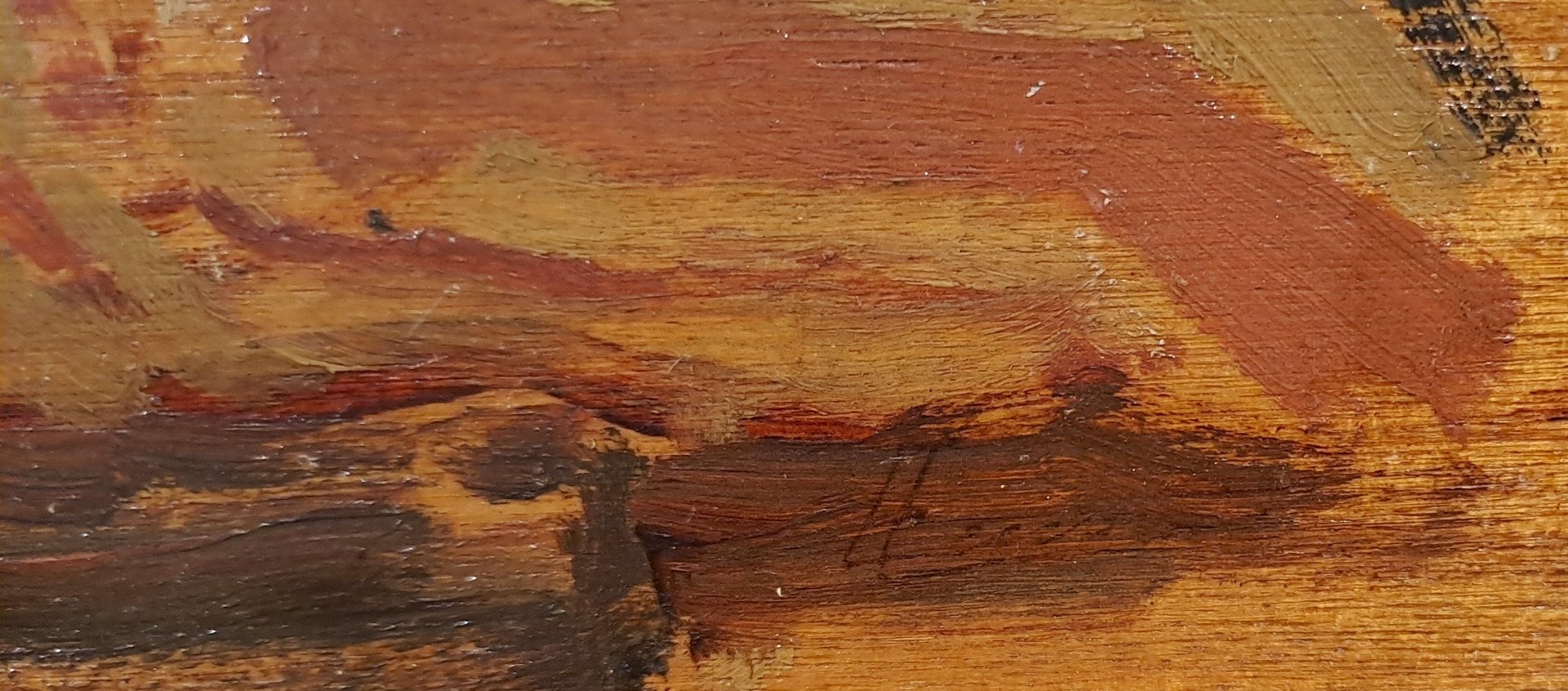
The work features a seated figure, presumably a woman, depicted in profile with her head bowed and resting on her hand, in an attitude of deep reflection or melancholy. The figure wears richly draped clothes and fabrics with vertical and horizontal stripes, with a wraparound headdress. The dominant colors are warm – ochre, dull yellow, burnt Sienna, and a hint of dark red – which stand out against the dense and dark background, dominated by a deep green and brown brushstrokes that leave the grain of the wood visible on the right.
The brushstroke is rapid, material, and vibrant, typical of the Macchiaioli sensitivity that Cecconi developed in contact with the Castiglioncello circle and with artists such as Giovanni Fattori. The study of light and color, concentrated on volumes and chromatic contrasts, is evident in the way the artist constructs the figure's dress.
This subject falls within Cecconi's production linked to his travels in Tunisia (1875), from which he drew inspiration for multiple "Oriental scenes" that accompanied his most famous representations of the Maremma, hunting, and dogs. The conditions are good, with the charm of the patina of time.
Notes on the Artist: Eugenio Cecconi (Livorno, 1842 – Florence, 1903)
Eugenio Cecconi was one of the most significant Italian painters in the Tuscan artistic scene of the second half of the 19th century, although he did not rigidly adhere to the Macchiaioli group.
Formation: After graduating in Law in Pisa, he devoted himself entirely to painting in Florence, attending Enrico Pollastrini's courses at the Academy.
Macchiaioli Contacts: His true artistic training took place in contact with Giovanni Fattori and with the critic Diego Martelli in Castiglioncello, where he developed a technique based on the "macchia" (stain) and on studying from life, characterized by a free and bold use of color and light.
Themes: He is famous for his hunting scenes and portraits of dogs, as well as for the landscapes of the Maremma and Torre del Lago.
The Journey to the Orient: A turning point was the journey to Tunisia in 1875 with his friend Adolfo Belimbau, which led him to create numerous paintings with oriental themes and figures, such as this one, enriching his palette and his perception of light.
Legacy: Cecconi exhibited in Italy and abroad, earning esteem for his personal artistic language, halfway between realism and the luministic suggestion of the Macchiaioli. His works are now kept in important private and museum collections, such as the Giovanni Fattori Civic Museum in Livorno.
A regular certificate of authenticity with photo is issued. We guarantee a response to your emails within 24 hours.
REGISTERED IN THE REGISTER OF EXPERTS AND CTU AT THE COURT OF LA SPEZIA