
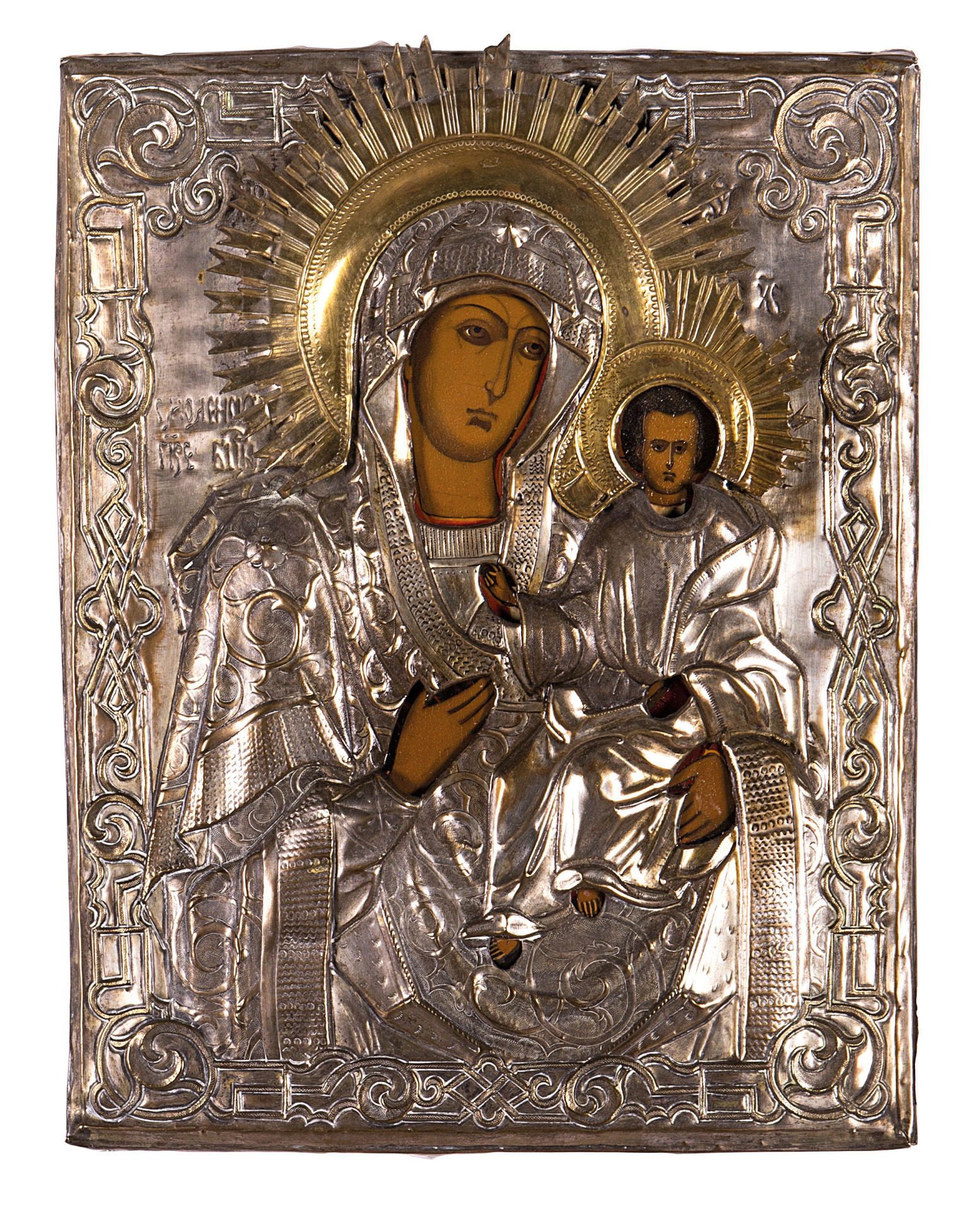
Icon depicting the Madonna and Child, painting on wood panel, embossed silver-plated copper riza, 19th century


Please sign in so that we can notify you about a reply
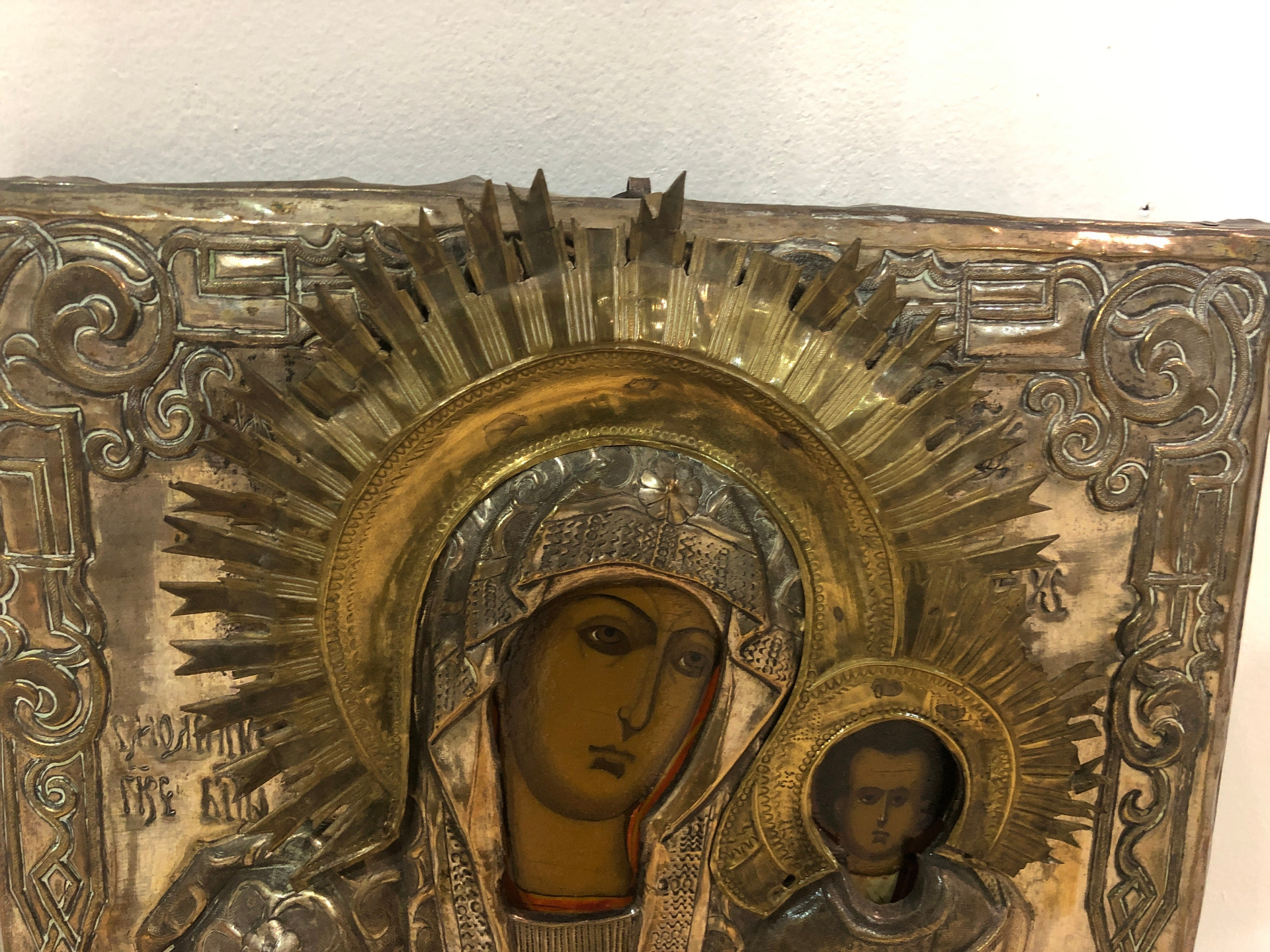
Icon depicting the Madonna and Child, painting on wood panel, embossed silver-plated copper riza, 19th century.
Dimensions: 42 x 32 cm
Price ranging between Euro 3,500.00-4,500.00
The item comes with a certificate of authenticity.
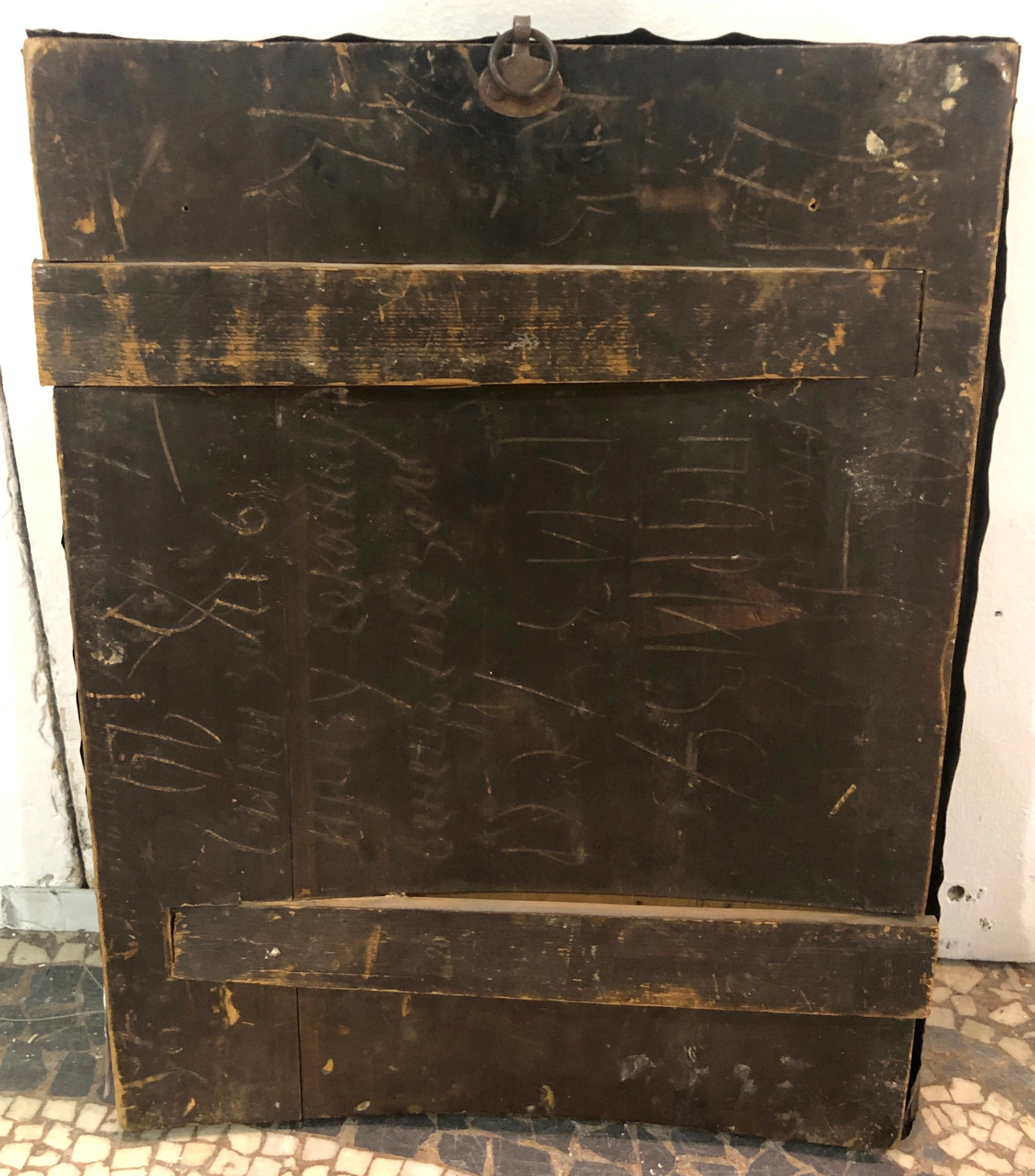
The icon, originating from Greco-Orthodox areas, was made in the 19th century and features a painting on a wooden panel and a chiseled gilded silver-plated copper riza.
The artwork depicts the Madonna with the Child. According to the tradition of the Christian Church of the East, the first iconographer of the Virgin was the evangelist Saint Luke, who portrayed the Madonna from life according to three main iconographic types from which the three most common canonical types derive. The Mother of God called "of Tenderness" (Theotókos Eléousa), holding the Child tight in a tender embrace; the Mother of God called "Orante" or "of the Sign" (Theotókos Panagía) holding her arms in prayer; The Mother of God called "She who points the Way" (Theotókos Hodigítria), with her hand pointing to the Child in her arms. This last type corresponds to the icon in question.
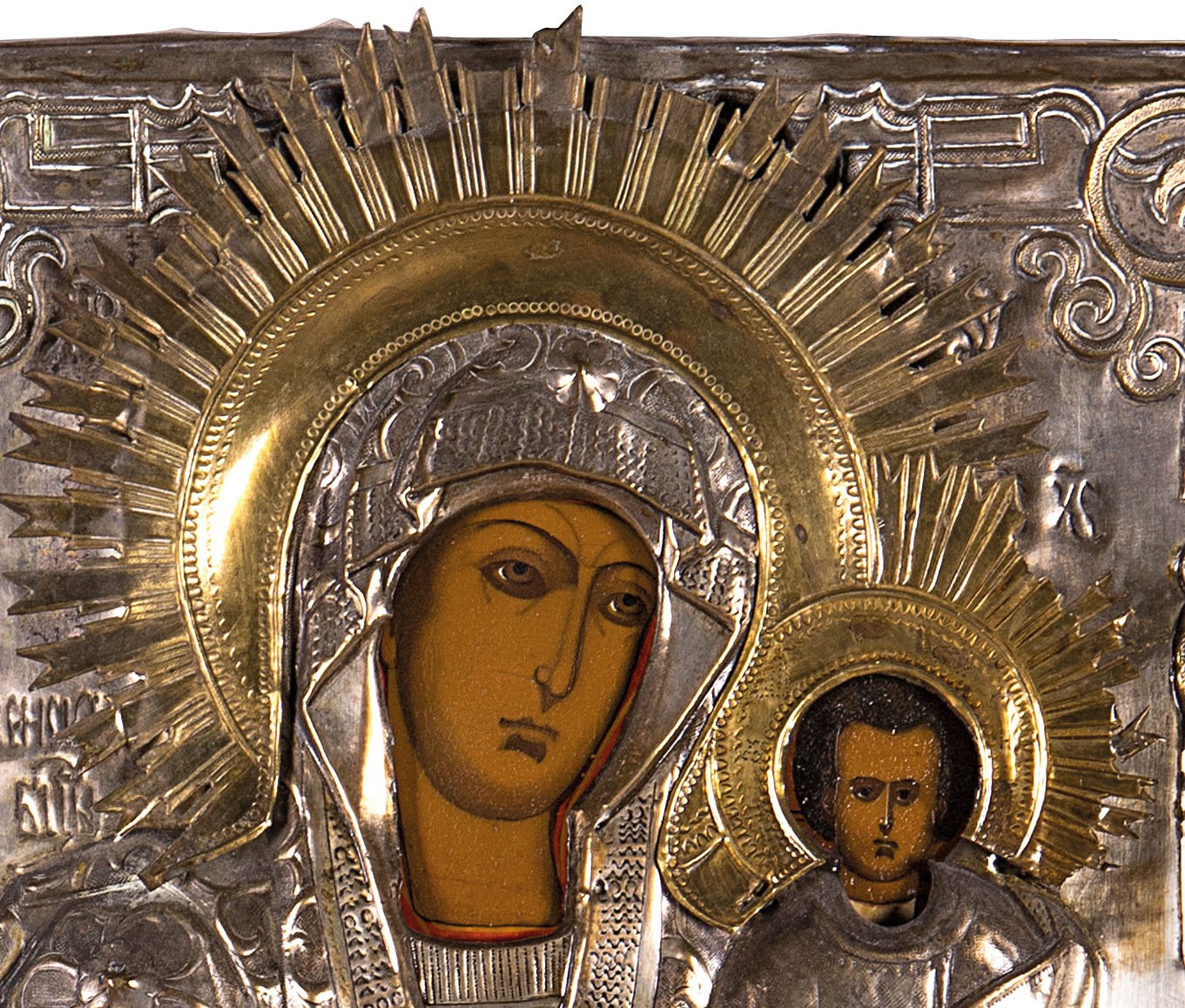
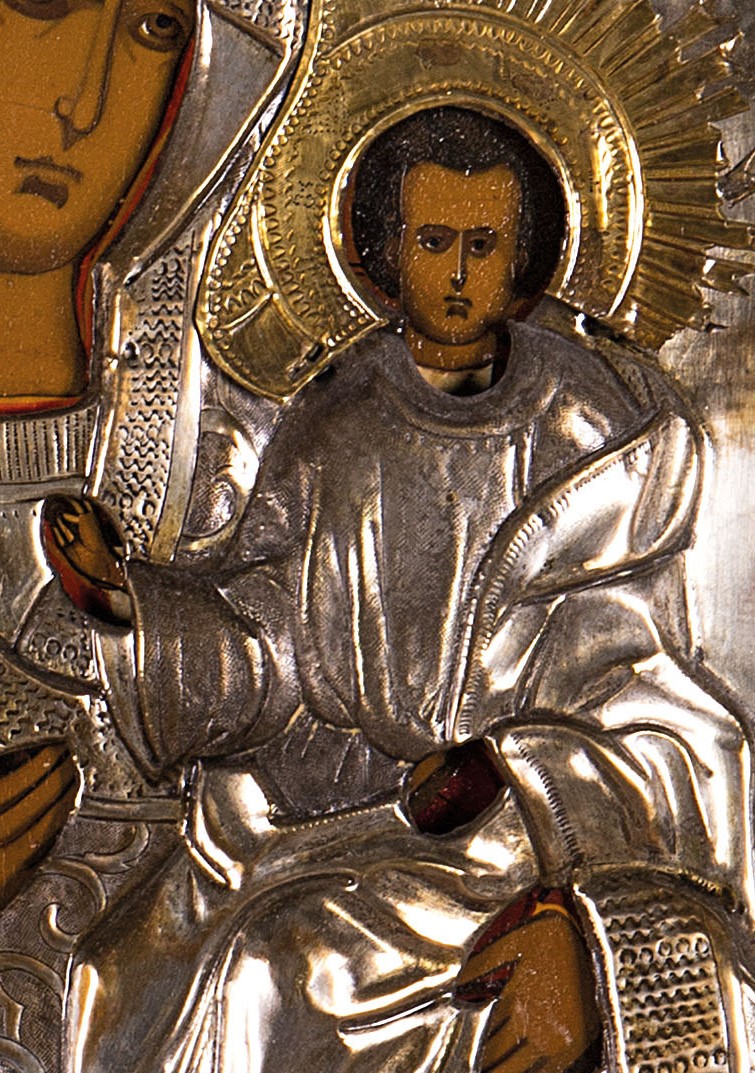
Here, the Mother of God points to the Divine Son with her hand, as the only 'Way of Salvation'. It is a particularly solemn Marian representation. The Virgin, represented half-length, is reclined towards the Child placed on her left. The Son of God, despite being depicted as an infant in the arms of the Mother, already has the features of an adult, signifying his awareness of the redemptive predestination, and that is of his future Passion, Death and Resurrection for the salvation of humankind. Jesus imparts the blessing with his right hand.
An icon is not simply a religious subject painting. Unlike Western art, which since about 1300 has moved away from this conception, the icon is the invocation of the presence of what is depicted, a prayer that passes through the materiality of colors, shapes, lines.
The icon really favors the encounter with the Lord, with the Mother of God, with the Saints for those who approach it with faith. It is, that is, a sacramental. The second Council of Nicaea (787), the last of the undivided Church, recognized its legitimacy, stating that "the believer who venerates the icon venerates the reality of who has been reproduced in it".
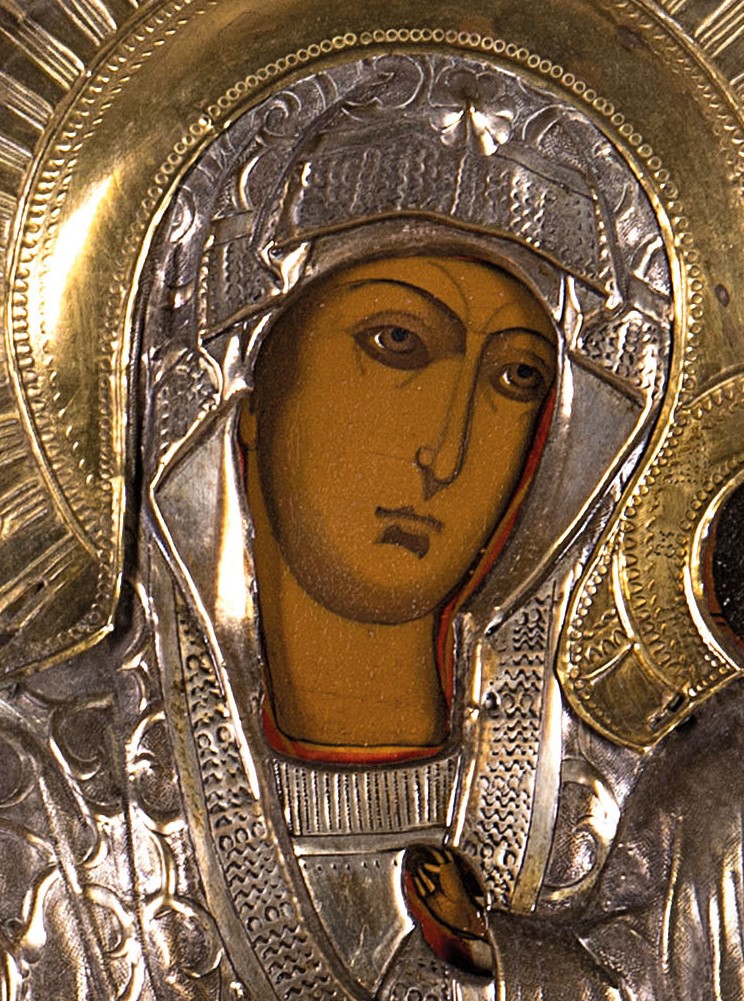
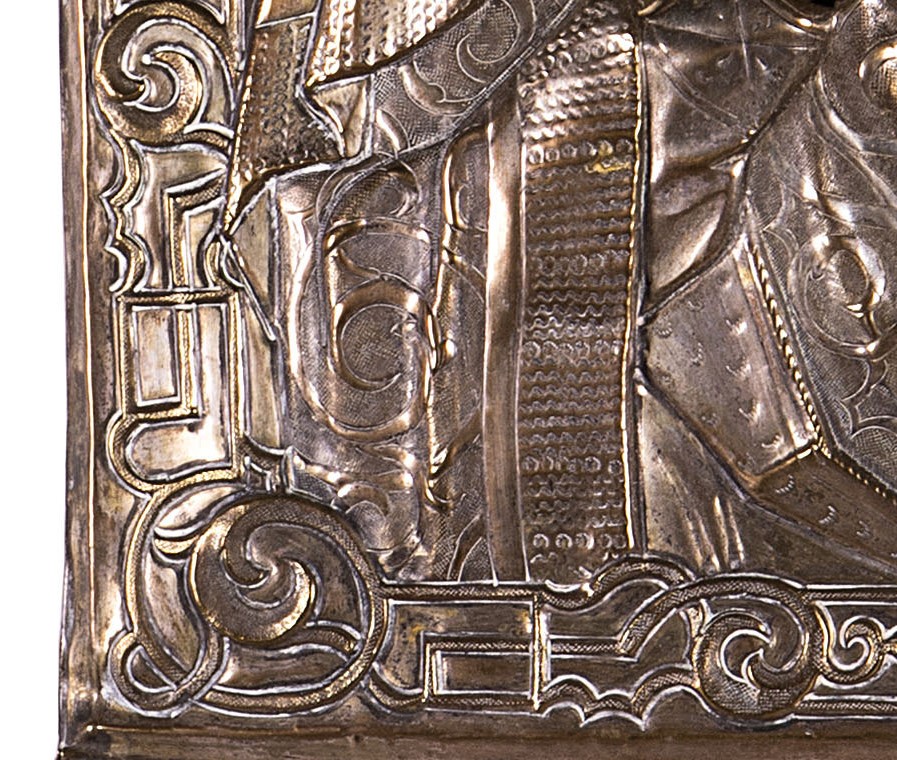
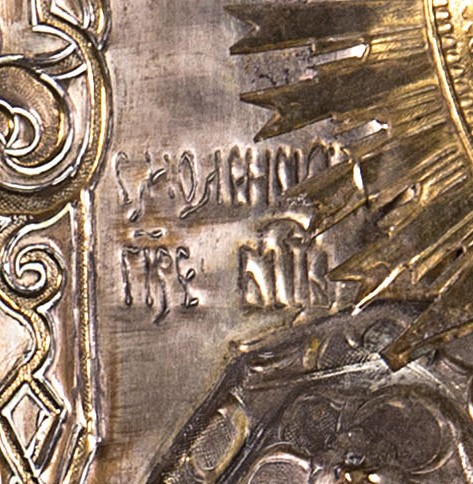
This icon is equipped with a rich riza, that is, a decorative covering of the icon that mostly affects the halos, background and clothes, leaving only the faces, hands and feet of the characters represented uncovered). The riza of this icon is in embossed and silver-plated copper. This is a valuable work of chiseling with a style that was widespread in the nineteenth century. Presumably the work was intended to occupy a privileged position, exposed to veneration within a rich private home. The elaborate ornamental motifs of the riza are emphasized thanks to the preciosness of the gold on the halos of the Virgin and Child.
Good state of preservation.